



P2X1 Receptor
P2X1 receptor is an ATP-gated cation channel expressed in human platelets and smooth muscle, where it links extracellular ATP to rapid Ca2+ influx and contractile or platelet responses[1][2]. Mechanistically, platelet P2X1 activation increases intracellular Ca2+, drives shape change, granule movement, and low-level αIIbβ3 integrin activation[3]. In thrombosis models, P2X1 supports platelet thrombus formation, especially under high-shear arterial conditions. In urogenital models, mice lacking P2X1 show reduced vas deferens contraction and male infertility, supporting its value in reproductive physiology research[2]. Compared with platelet P2Y1 and P2Y12 receptors, P2X1 is an ATP-gated ion channel rather than an ADP-dependent G-protein-coupled receptor[3]. Compared with P2X2, P2X1 shows distinctive antagonist sensitivity because basic residues in its cysteine-rich head region contribute to NF449 and suramin inhibition[4]. For experimental applications, α,β-methylene ATP can selectively evoke platelet shape change through P2X1, whereas NF449, suramin, and structural studies support antagonist-focused assay design[4][5][6].
References:
- [1]. Clifford EE, et al. The P2X1 receptor, an adenosine triphosphate-gated cation channel, is expressed in human platelets but not in human blood leukocytes. Blood. 1998 May 1;91(9):3172-81. [Content Brief]
- [2]. Mulryan K, et al. Reduced vas deferens contraction and male infertility in mice lacking P2X1 receptors. Nature. 2000 Jan 6;403(6765):86-9. [Content Brief]
- [3]. Mahaut-Smith MP, et al. The P2X1 receptor and platelet function. Purinergic Signal. 2011 Sep;7(3):341-56. [Content Brief]
- [4]. El-Ajouz S, et al. Molecular basis of selective antagonism of the P2X1 receptor for ATP by NF449 and suramin: contribution of basic amino acids in the cysteine-rich loop. Br J Pharmacol. 2012 Jan;165(2):390-400. [Content Brief]
- [5]. Rolf MG, et al. Platelet shape change evoked by selective activation of P2X1 purinoceptors with alpha,beta-methylene ATP. Thromb Haemost. 2001 Feb;85(2):303-8. [Content Brief]
- [6]. Bennetts FM, et al. Structural insights into the human P2X1 receptor and ligand interactions. Nat Commun. 2024 Sep 28;15(1):8418. [Content Brief]
-
P2X1 Receptor Related Products (13)
Related Products (13)

- 1
-
BzATP triethylammonium salt
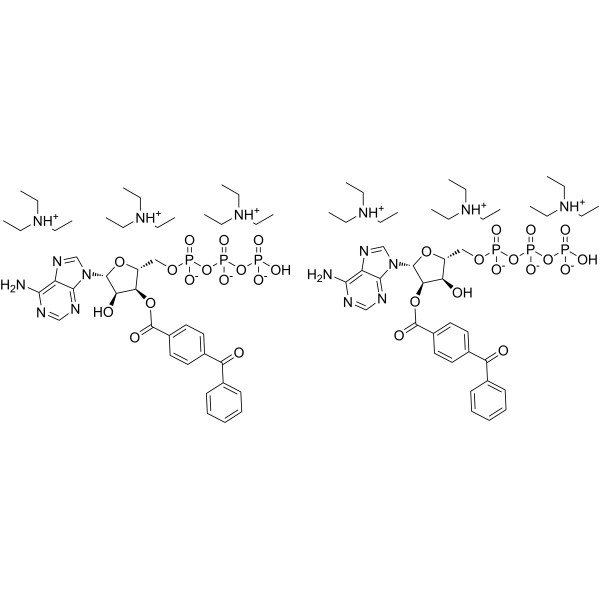 0 ImagesCat. No.: HY-136254Purity: 99.19%BzATP triethylammonium salt acts as a P2X receptor agonist with pEC50s of 8.74, 5.26, 7.10, 7.50, 6.19, 6.31, 5.33 for P2X1, P2X2, P2X3, P2X2/3, P2X4 and P2X7, respectively. BzATP triethylammonium salt is potent at P2X7 receptors with EC50s of 3.6 μM and 285 μM for rat P2X7 and mouse P2X7, respectively.
-
NF449 octasodium
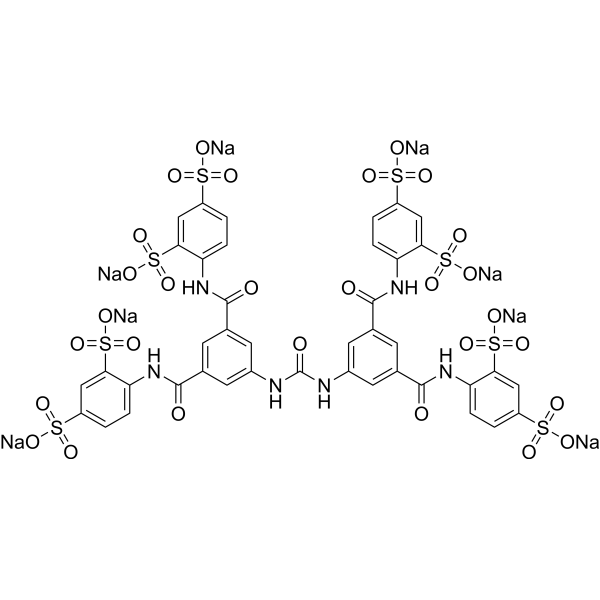 0 ImagesCat. No.: HY-112461ACAS No.: 627034-85-9NF449 octasodium is a highly potent P2X1 receptor antagonist, with IC50s of 0.28, 0.69, and 120 nM for rP2X1, rP2X1+5, P2X2+3, respectively. NF449 octasodium is a Gsα-selective G Protein antagonist. NF449 octasodium suppresses the rate of GTP[γS] binding to Gsα-s, inhibits the stimulation of adenylyl cyclase activity, and blocks the coupling of β-adrenergic receptors to Gs.
-
Aurintricarboxylic acid
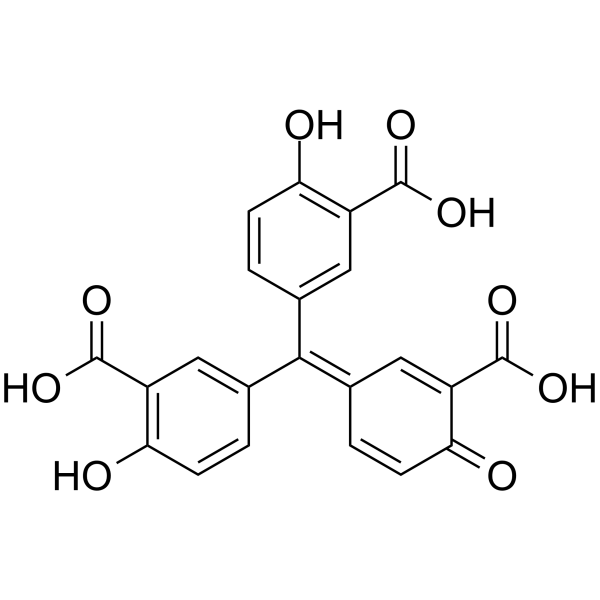 0 ImagesAurintricarboxylic acid is a nanomolar-potency, allosteric antagonist with selectivity towards αβ-methylene-ATP-sensitive P2X1Rs and P2X3Rs, with IC50s of 8.6 nM and 72.9 nM for rP2X1R and rP2X3R, respectively. Aurintricarboxylic acid is a potent anti-influenza agent by directly inhibiting the neuraminidase. Aurintricarboxylic acid is an inhibitor of topoisomerase II and apoptosis. Aurintricarboxylic acid is a selective inhibitor of the TWEAK-Fn14 signaling pathway. Aurintricarboxylic acid also acts as a cystathionine-lyase (CSE) inhibitor with an IC50 of 0.6 μM. Aurintricarboxylic acid is a modifier of miRNAs that regulate miRNA function, with an IC50 of 0.47 µM.
-
PPADS tetrasodium
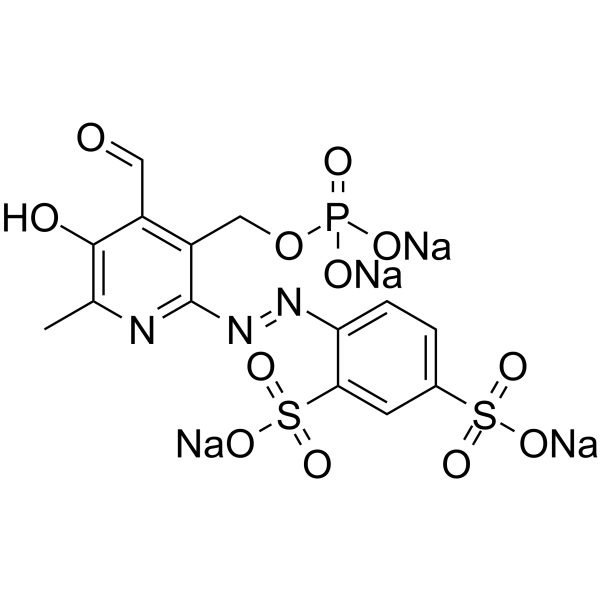 0 ImagesPPADS tetrasodiuma is a non-selective P2X receptor antagonist. PPADS tetrasodiuma blocks recombinant P2X1, -2, -3, -5 with IC50s ranging from 1 to 2.6 μM. PPADS tetrasodiuma blocks native P2Y2-like (IC50~0.9 mM) and recombinant P2Y4 (IC50~15 mM) receptors. PPADS tetrasodiuma is an inhibitor of the reverse mode of the Na/Ca2+ exchanger in guinea pig airway smooth muscle.
-
α,β-Methylene-ATP trisodium
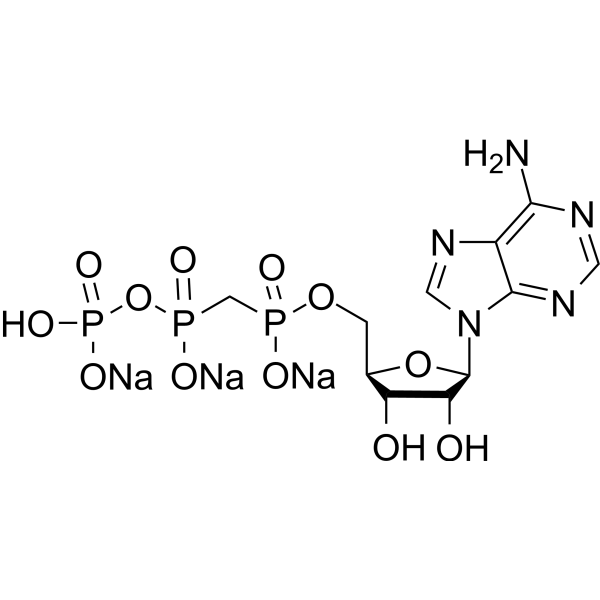 0 Imagesα,β-Methylene-ATP trisodium is an agonist of P2X1 and P2X3 receptors and can cross the blood-brain barrier. α,β-Methylene-ATP trisodium can trigger a reflex pressor response by activating P2X receptors in peripheral muscles and the central locus coeruleus (LC); this effect can be blocked by the P2X antagonist PPADS (HY-108960). α,β-Methylene-ATP trisodium also activates noradrenergic neurons in the central locus coeruleus, mediating antinociceptive effects; this effect can be attenuated by the locus coeruleus damaging agent DSP-4 (HY-103210/HY-121602). α,β-Methylene-ATP trisodium can be used to study the pathological mechanisms of neuropathic pain, cardiovascular reflex regulation, and antinociceptive effects of the central nervous system.
-
Diadenosine pentaphosphate pentasodium
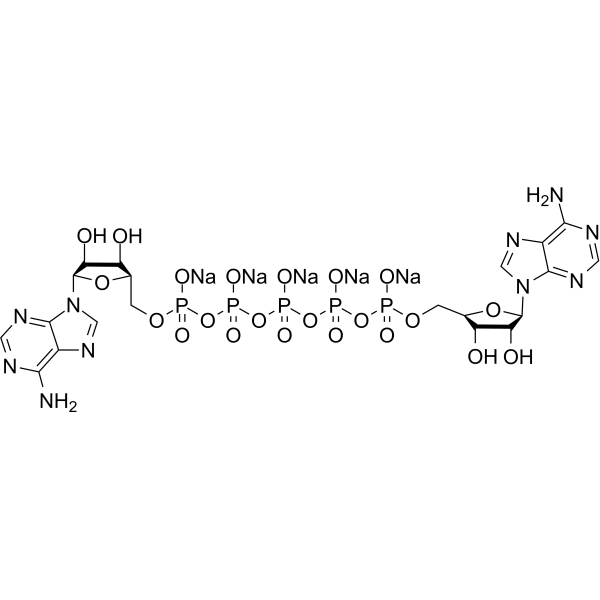 0 ImagesSynonyms: Ap5A pentasodium; P1,P5-Di(adenosine-5'-)pentaphosphate pentasodiumDiadenosine pentaphosphate (Ap5A; P1,P5-Di(adenosine-5'-)pentaphosphate) pentasodium is an endogenous generated diadenosine polyphosphate, possessing the dual identities of intracellular alarm signal and extracellular signaling molecule. Diadenosine pentaphosphate regulates calcium signaling in the nervous, cardiac and peripheral sensory systems by activating P2X1/P2X3/P2Y receptor and RyR2 channels (EC50 = 140 μM). Diadenosine pentaphosphate can be used in studies related to intracellular calcium release channels, cardiovascular diseases and nociception (pain).
-
NF023 hexasodium
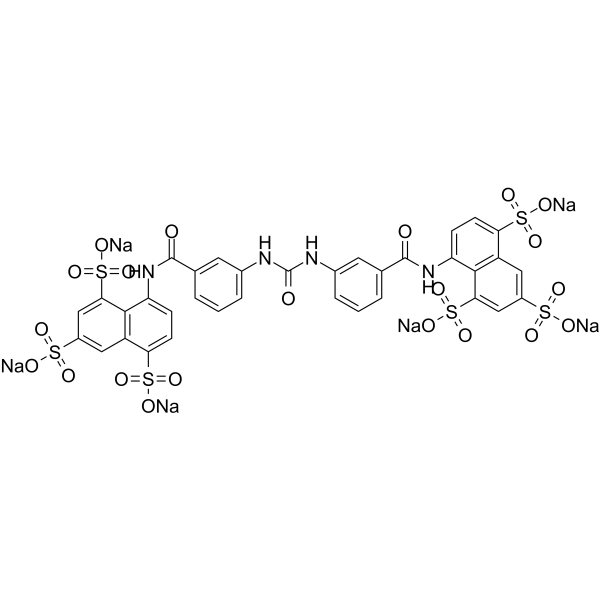 0 ImagesNF023 hexasodium is a selective and competitive P2X1 receptor antagonist, with IC50 values of 0.21 μM, 28.9 μM, > 50 μM and > 100 μM for human P2X1, P2X3, P2X2, and P2X4-mediated responses respectively.
-
NF279
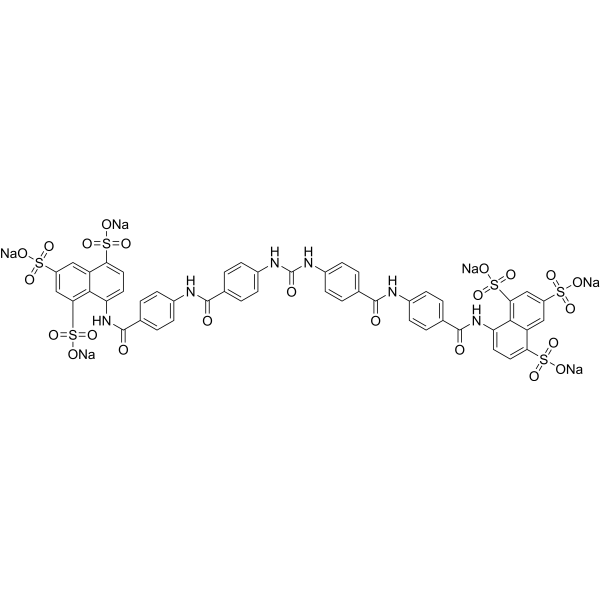 0 ImagesNF279 is a selective P2X1 receptor antagonist and NTPDase inhibitor, with a P2X1 IC50 value of 19 nM. NF279 suppresses GABA-evoked currents, reduces ATP-excited respiratory activity, alters hypoglossal nerve burst parameters, and blocks CXCR4, CCR5, CXCR3, and CXCR7-mediated calcium responses. NF279 arrests HIV-1 fusion downstream of CD4 binding, inhibits R5- and X4-tropic HIV-1 strains. NF279 can be used for the research of HIV-1 infection.
-
PPNDS tetrasodium
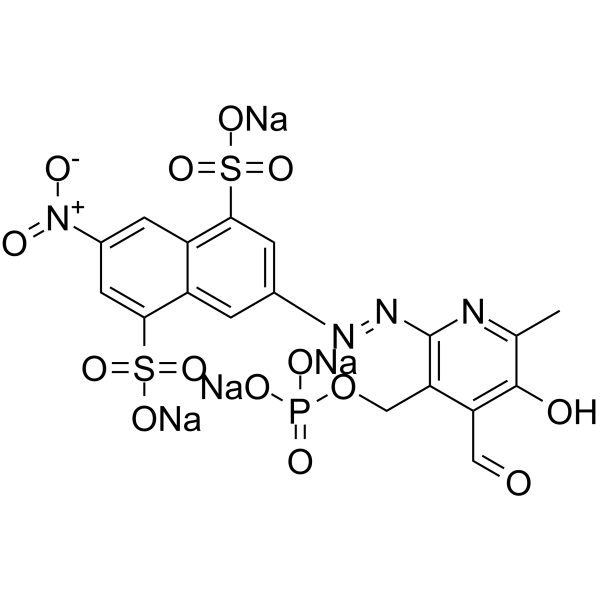 0 ImagesCat. No.: HY-108675CAS No.: 1021868-77-8PPNDS tetrasodium is a selective and competitive meprin β inhibitor (IC50: 80 nM, Ki: 8 nM), and also inhibits ADAM10 (IC50: 1.2 μM). PPNDS tetrasodium is also a P2X1 receptor antagonist. PPNDS is an agonist for the ATP receptor of Paramecium. PPNDS tetrasodium potently inhibits polymerases from viruses. PPNDS tetrasodium can be used in the research of infection and cancers.
-
Blue FPG-A trisodium
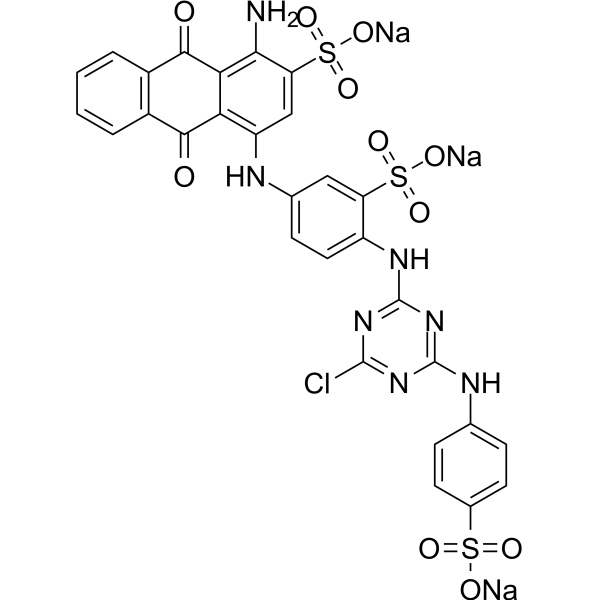 0 ImagesCat. No.: HY-D1199CAS No.: 78617-94-4Blue FPG-A trisodium is a selective antagonist of P2X1 receptor and P2Y1 receptor with IC50 values of 35.5 μM and 2.6 μM, respectively. Blue FPG-A trisodium is a structural isomer of the components of Reactive Blue 2 (RB2).
-
PPADS
 0 ImagesCat. No.: HY-108960CAS No.: 149017-66-3PPADS is a P2X receptor (P2X Receptor) antagonist and a reversible competitive antagonist of NAADP receptors, with IC50 values of 68 nM (P2X1) and 214 nM (P2X3), respectively. PPADS alleviates pain-related behaviors in the central and peripheral nervous systems of mice after peripheral neuropathy, inhibits the overproduction of IL-1β, IL-6, iNOS and nNOS, and suppresses the hydrolytic activity of extracellular ATPase. PPADS blocks ATP-mediated inward currents on recombinant rat P2X1 and P2X3 receptors, and inhibits purinergic nerve stimulation-induced contraction of rabbit bladder detrusor muscle. PPADS is applicable to research related to neuropathic pain.
-
α,β-Methylene-ATP dilithium
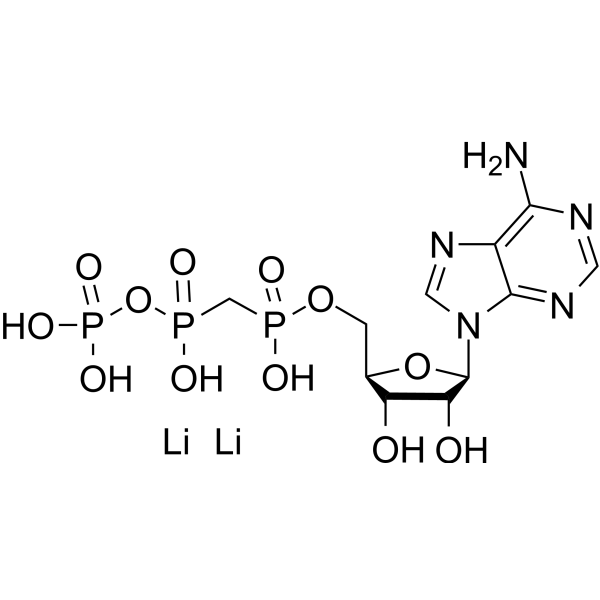 0 ImagesCat. No.: HY-134440CAS No.: 104809-20-3α,β-Methylene-ATP dilithium is an agonist of P2X1 and P2X3 receptors and can cross the blood-brain barrier. α,β-Methylene-ATP dilithium can trigger a reflex pressor response by activating P2X receptors in peripheral muscles and the central locus coeruleus (LC); this effect can be blocked by the P2X antagonist PPADS (HY-108960). α,β-Methylene-ATP dilithium also activates noradrenergic neurons in the central locus coeruleus, mediating antinociceptive effects; this effect can be attenuated by the locus coeruleus damaging agent DSP-4 (HY-103210/HY-121602). α,β-Methylene-ATP dilithium can be used to study the pathological mechanisms of neuropathic pain, cardiovascular reflex regulation, and antinociceptive effects of the central nervous system.
-
NF449
 0 ImagesCat. No.: HY-112461CAS No.: 389142-38-5NF449 is a highly potent P2X1 receptor antagonist, with IC50s of 0.28, 0.69, and 120 nM for rP2X1, rP2X1+5, P2X2+3, respectively. NF449 is a Gsα-selective G Protein antagonist. NF449 suppresses the rate of GTP[γS] binding to Gsα-s, inhibits the stimulation of adenylyl cyclase activity, and blocks the coupling of β-adrenergic receptors to Gs.
- 1



